
Dessert · indian cuisine
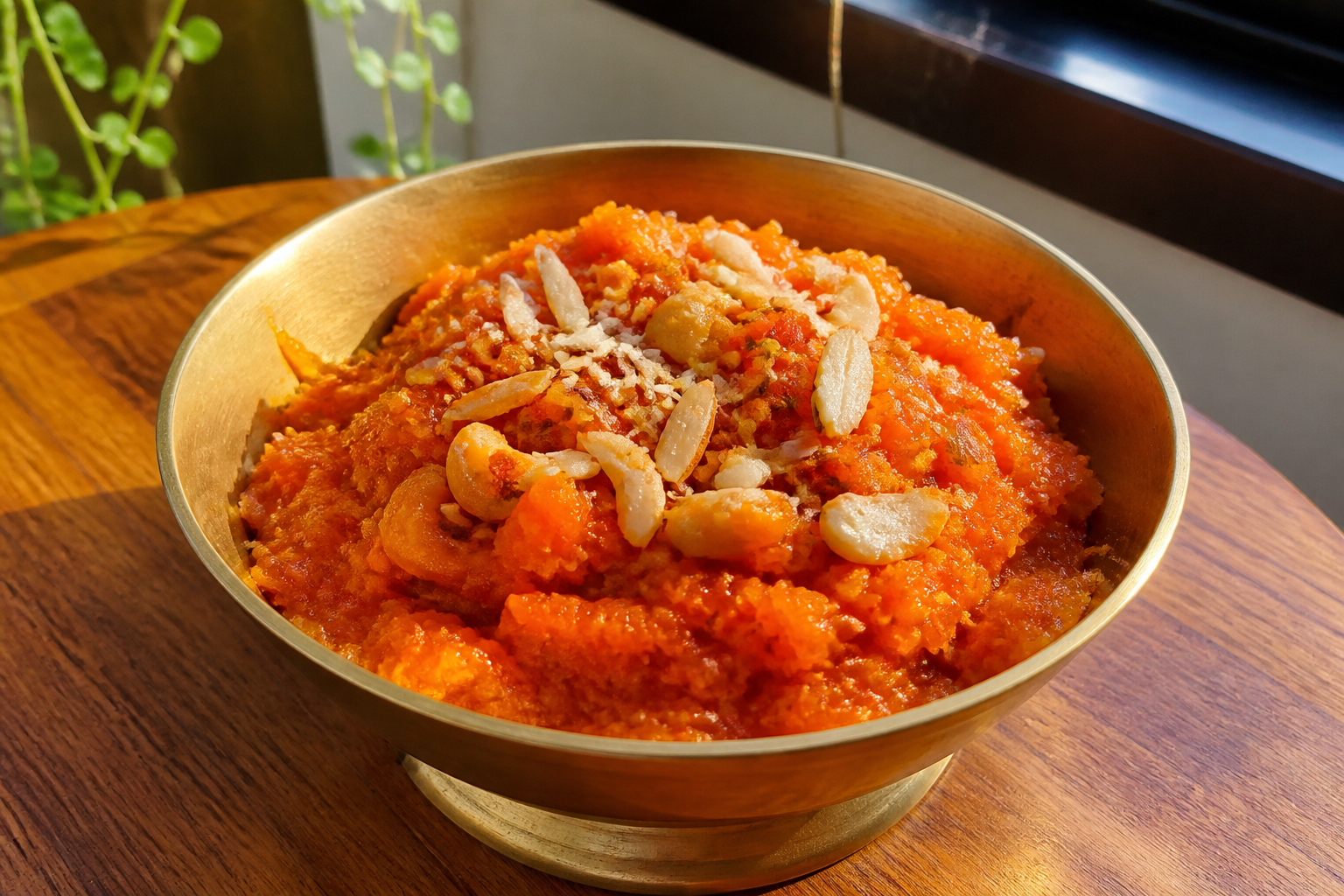
Winter Gajar Halwa
Milk reduces, carrots sweeten, ghee finishes. Stir when it starts sticking — it will.
From my kitchen notebook
I grate carrots fine so they melt into the milk faster. The halwa is ready when the spoon leaves a clean trail at the bottom of the pan.
Recipe card
Why this recipe works
Gajar halwa belongs to winter evenings and red carrots if you can find them. The milk must fully absorb before sugar goes in, then reduce again. That double concentration is what makes it dense and glossy instead of watery.
Khoya is a luxury add-on. Even without it, patience and ghee create depth.
Expert kitchen tips
- Sauté carrots in ghee first for better flavour.
- Cook out the milk completely before adding sugar.
- Finish when the mixture leaves the pan sides cleanly.
Ingredients
- 500g carrots, peeled and grated
- 500ml full-fat milk
- ½ cup sugar
- 3 tbsp ghee
- 4 green cardamom pods, crushed
- 2 tbsp chopped cashews
- 2 tbsp raisins
- 2 tbsp khoya (evaporated milk solid) — optional
Step-by-step method
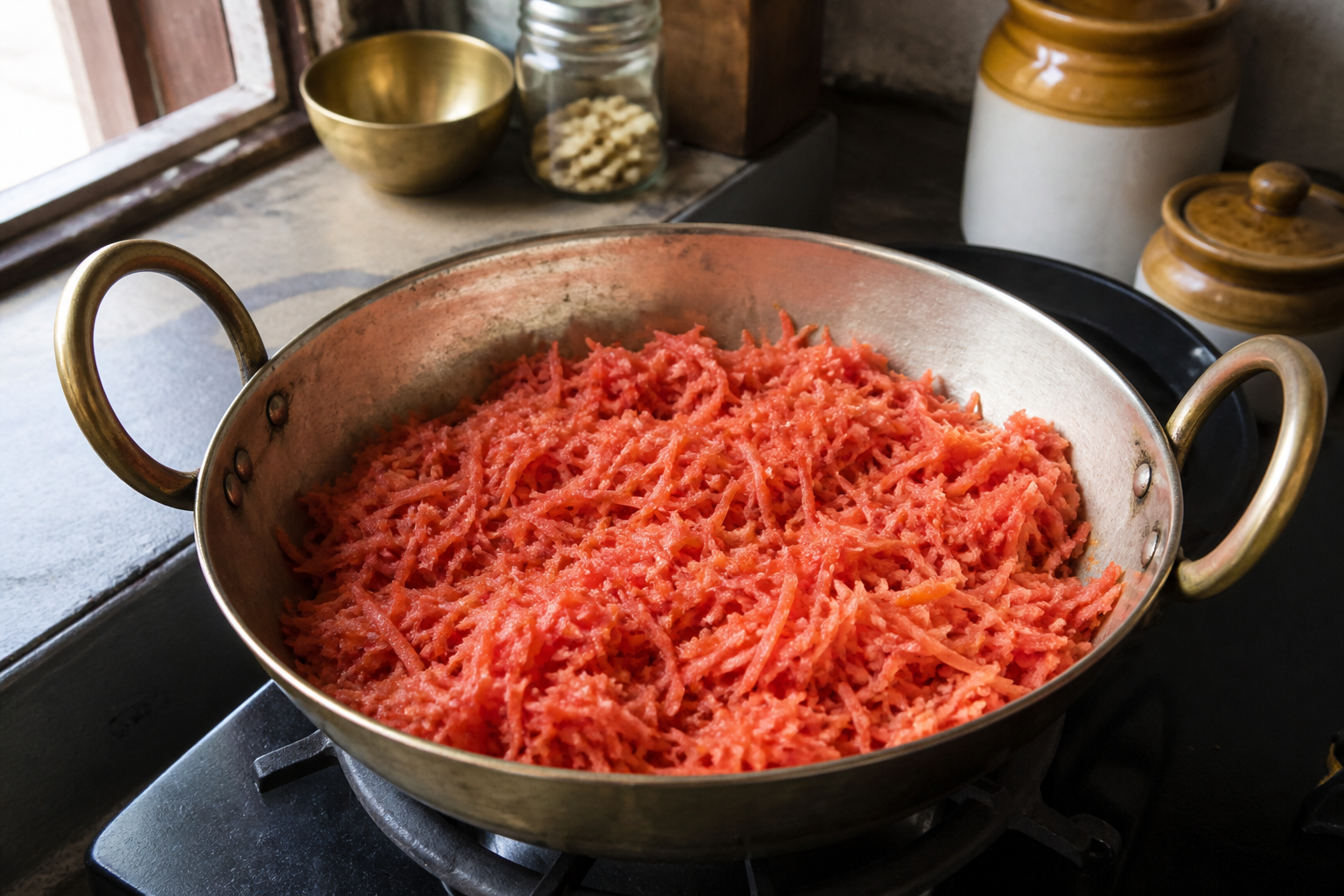 Melt ghee in a heavy pan on medium heat. Add grated carrots and sauté for 5 minutes.
- Add milk and bring to a boil. Cook on medium heat, stirring regularly, until all the milk is absorbed by the carrots (about 20 minutes).
- Add sugar and continue cooking. The mixture will become liquid again — cook until it thickens back up.
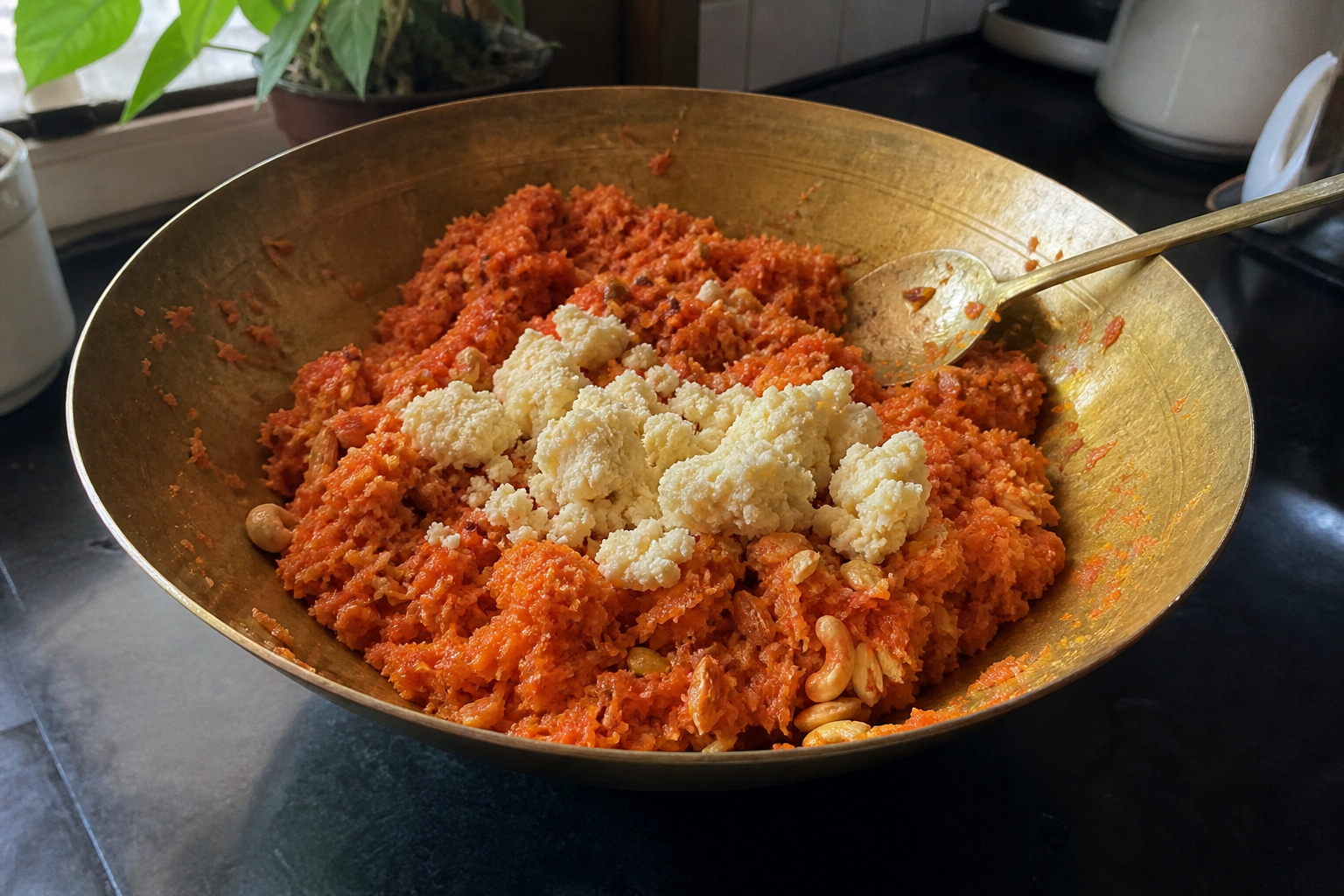 Add khoya (if using) and mix well. Cook another 5 minutes.
- Add crushed cardamom, cashews and raisins. Stir and cook 2 more minutes.
- The halwa is ready when it leaves the sides of the pan and has a glossy finish.
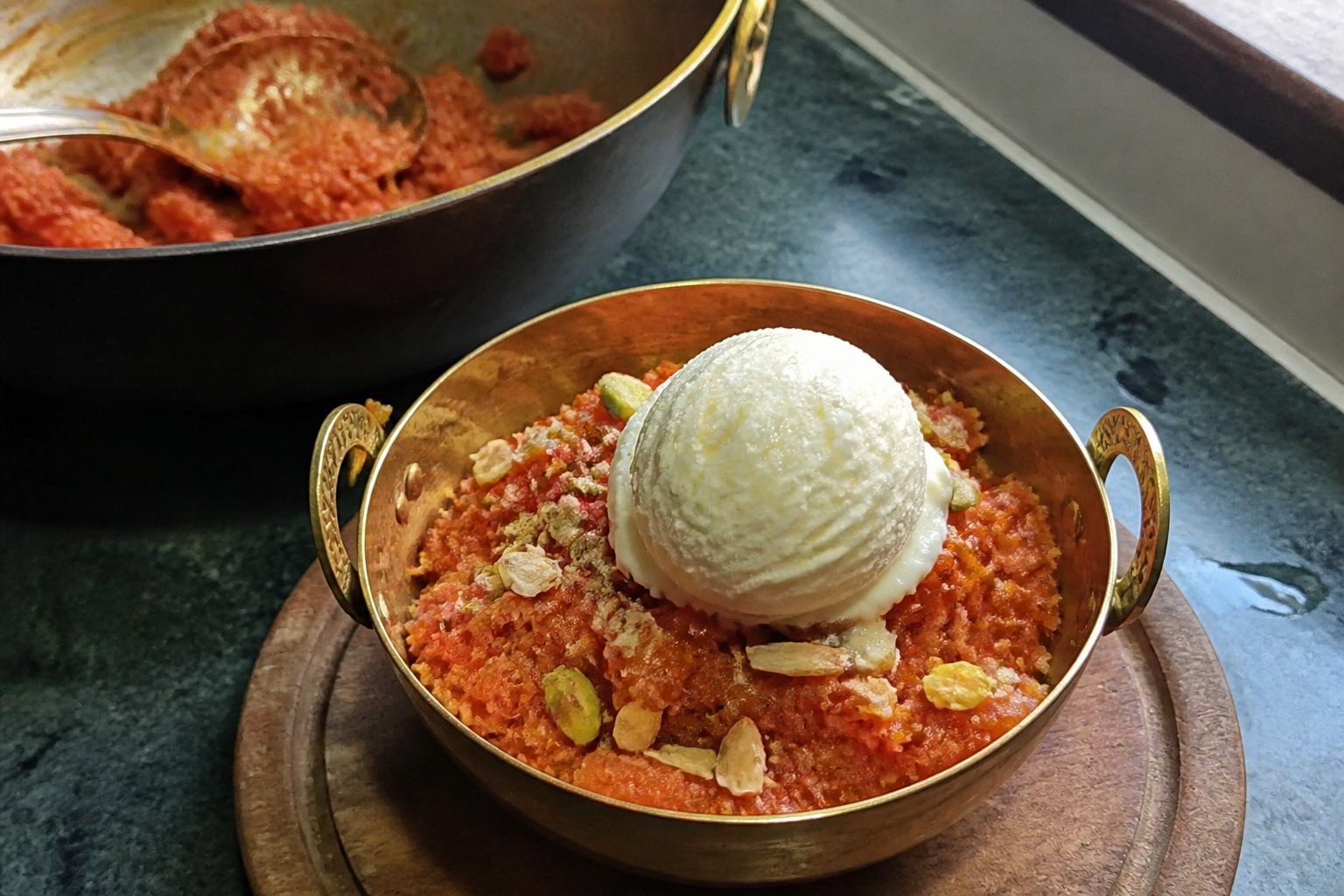 Serve warm, ideally with a scoop of vanilla ice cream.
Estimated nutrition
About 360 calories per serving (based on 4 servings). Values are estimates for home cooks and vary by brands, oil used, and portion size — not lab-analysed.
After the ghee settles
I serve gajar halwa warm with a few chopped pistachios, or chilled in small bowls when the kitchen is already hot from cooking. A spoon of cold cream on top feels festive without much fuss.
Leftovers thicken in the fridge — that is normal. Reheat with a splash of milk, stirring until glossy again. It keeps three to four days sealed; freeze portions if you cooked a big winter batch.
This recipe is original CookMe editorial content for home cooks. Nutrition varies by brands and portions. If you have allergies, check every label. CookMe may display ads via partners such as Mediavine; see our Privacy Policy and Advertising Disclosure.