
Italian Pasta · italian cuisine
Spaghetti Carbonara Recipe (No Cream)
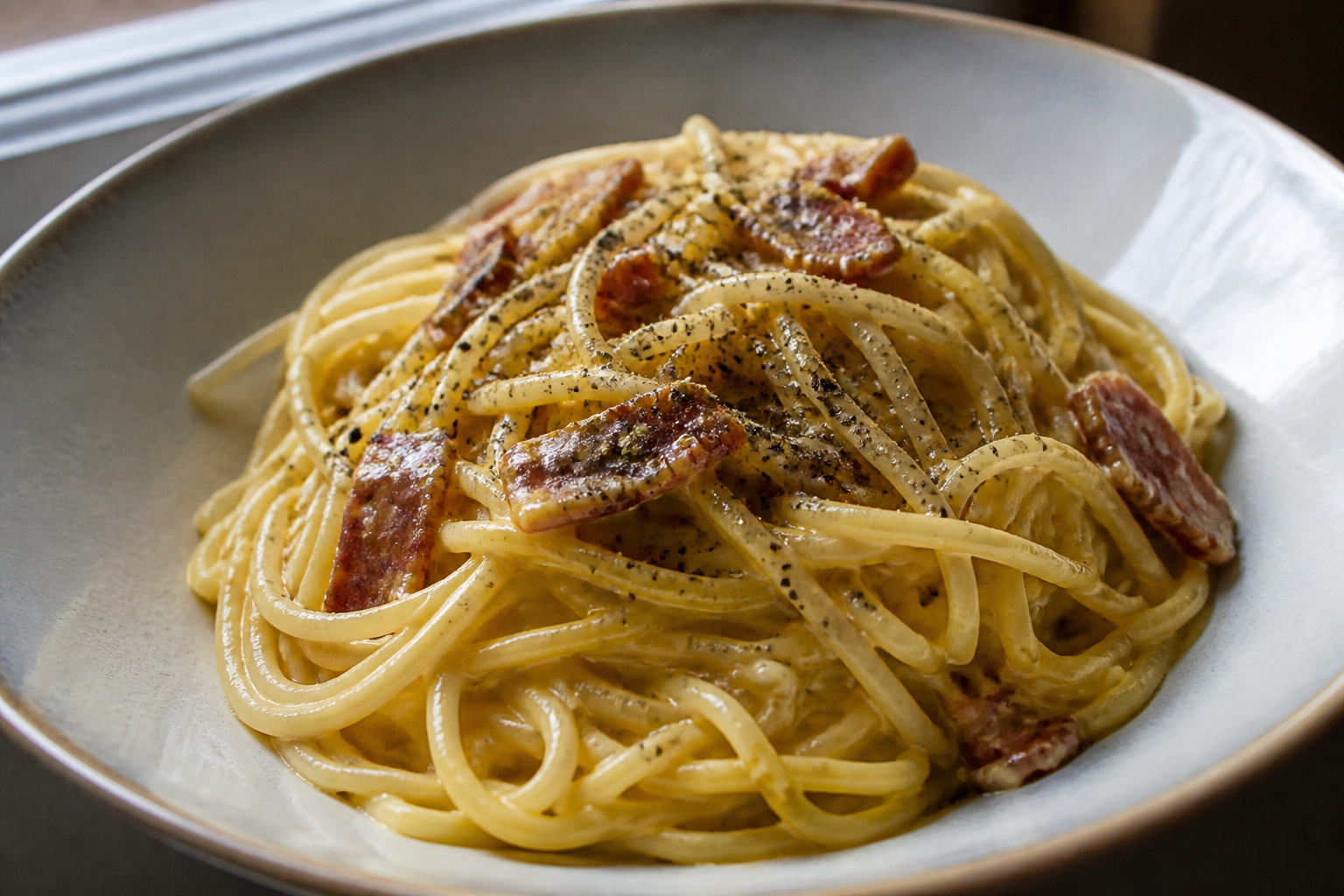
This spaghetti carbonara recipe uses guanciale, egg, Pecorino, and pepper — no cream. Pull the pan off the heat so the sauce stays glossy and does not scramble.
Guanciale fat, egg and cheese off the heat, pasta water as needed. Cream never enters my pan.
From my kitchen notebook
No cream in my pan — ever. Pan off heat, wait twenty seconds, then toss with egg, cheese, and pasta water until glossy.
Recipe card
Why this recipe works
The first time I made carbonara in a tiny kitchen near Trastevere, an old nonna watched me reach for the cream carton and gently shook her head. "That is American carbonara," she said. Real Roman carbonara is built on four things done carefully: guanciale rendered until the fat turns golden and aromatic, eggs tempered off the heat, sharp Pecorino Romano, and enough pasta water to emulsify everything into a glossy sauce that clings to every strand.
Most home cooks scramble the eggs because they panic and keep the pan on high heat. The secret is timing and residual heat. Pull the pan off the burner, wait a few seconds, then toss like your life depends on it. If the sauce looks tight, a spoon of starchy pasta water loosens it into velvet. If it looks watery, keep tossing — the cheese and egg will catch.
I have tested this recipe with pancetta when guanciale was impossible to find. It works, but the flavour is milder. Keep the pepper freshly cracked and generous — pepper is not a garnish here; it is a main character.
What usually goes wrong
- Pan still on high when eggs go in = scrambled flecks. Pull off heat and wait a few seconds.
- No pasta water saved = sauce that will not loosen. Scoop a cup before you drain.
- Coarse cheese shreds refuse to melt. Finest grate for Pecorino.
- Cream. I do not use it. Extra yolk and starch water do the richness.
Ingredients
- 400g spaghetti (bronze-cut if possible)
- 150g guanciale, cut into thick lardons (pancetta as substitute)
- 3 large egg yolks + 1 whole egg, room temperature
- 90g Pecorino Romano, finely grated (plus extra to serve)
- Freshly cracked black pepper, generous
- Salt for pasta water only (guanciale is salty)
Step-by-step method
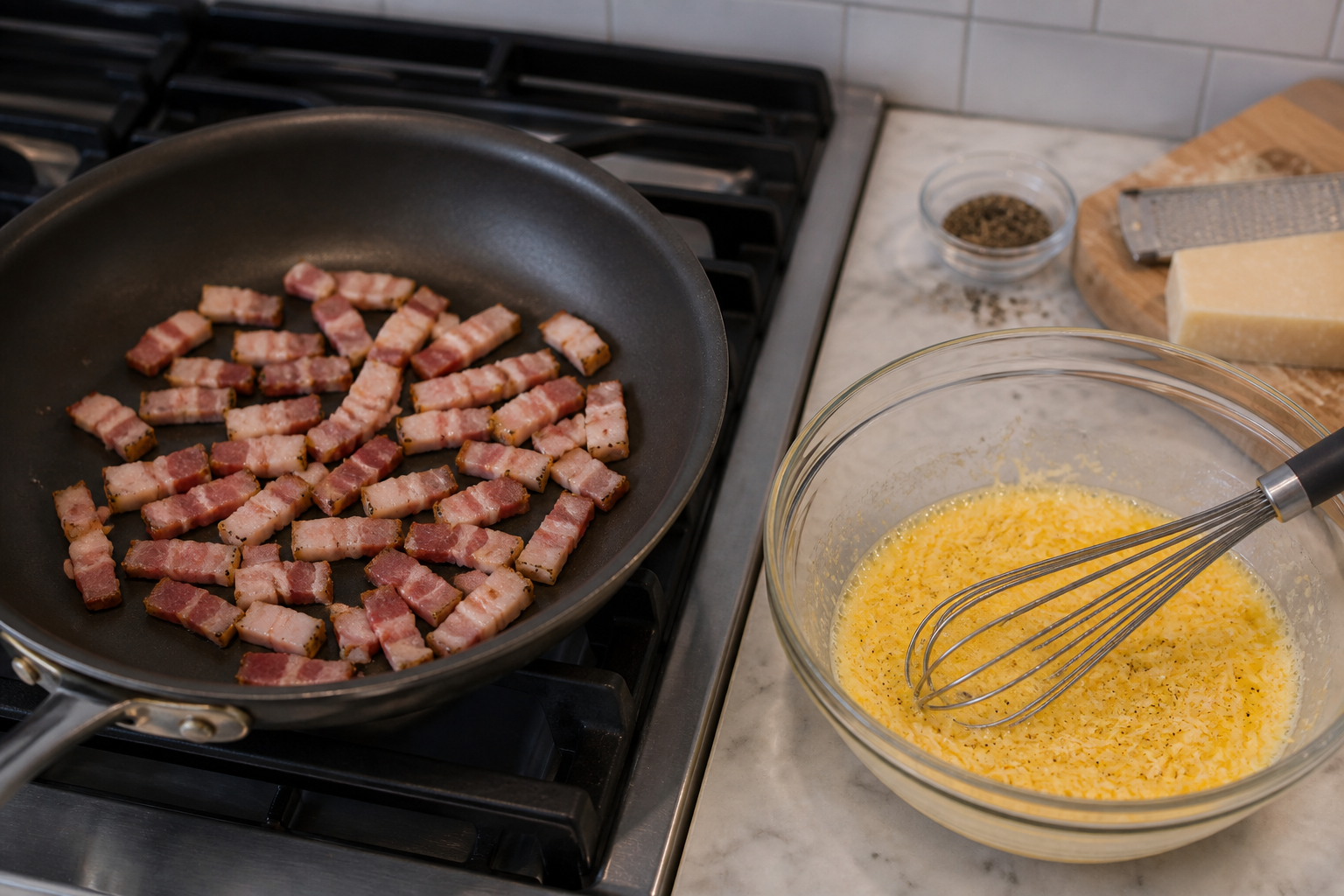 Bring a large pot of well-salted water to a rolling boil. Carbonara waits for no one — have your mise ready before the pasta goes in.
- In a cold skillet, add guanciale. Turn heat to medium and render slowly until the fat is translucent gold and the edges are crisp, 8–10 minutes. Do not rush on high heat or the meat toughens. Keep the rendered fat in the pan.
- Whisk yolks, whole egg, most of the Pecorino, and a heavy grind of pepper in a bowl until thick and paste-like. Set aside near the stove.
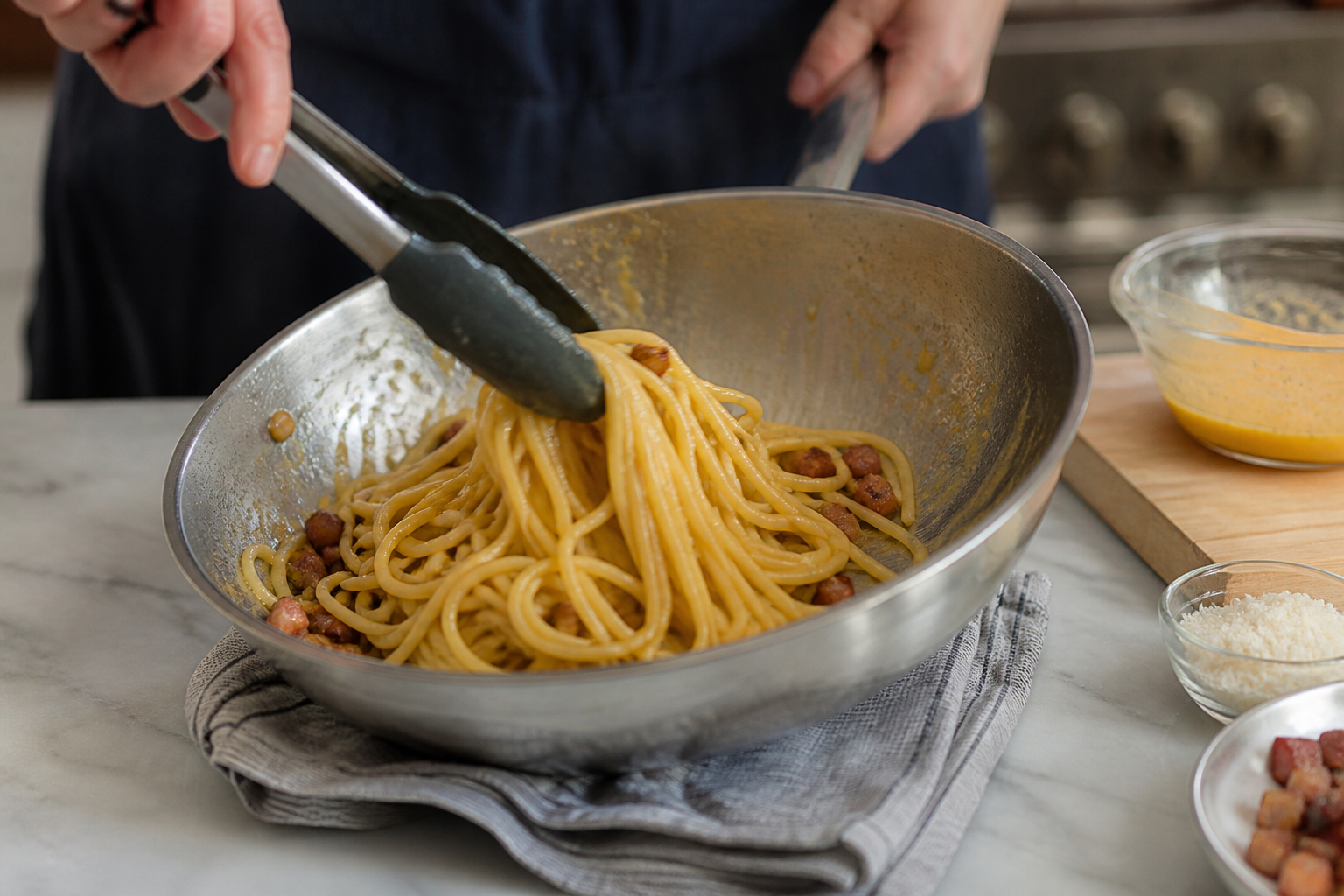 Cook spaghetti until just shy of al dente (about 1 minute under package time). Scoop out 1 cup of pasta water, then drain.
- Add hot pasta to the guanciale pan off the heat. Toss so every strand is coated in fat. Wait 20–30 seconds so the pan is hot but not blistering.
- Pour in the egg-cheese mixture and toss vigorously, adding pasta water a tablespoon at a time until the sauce turns glossy and coats the spaghetti. Never return to high heat.
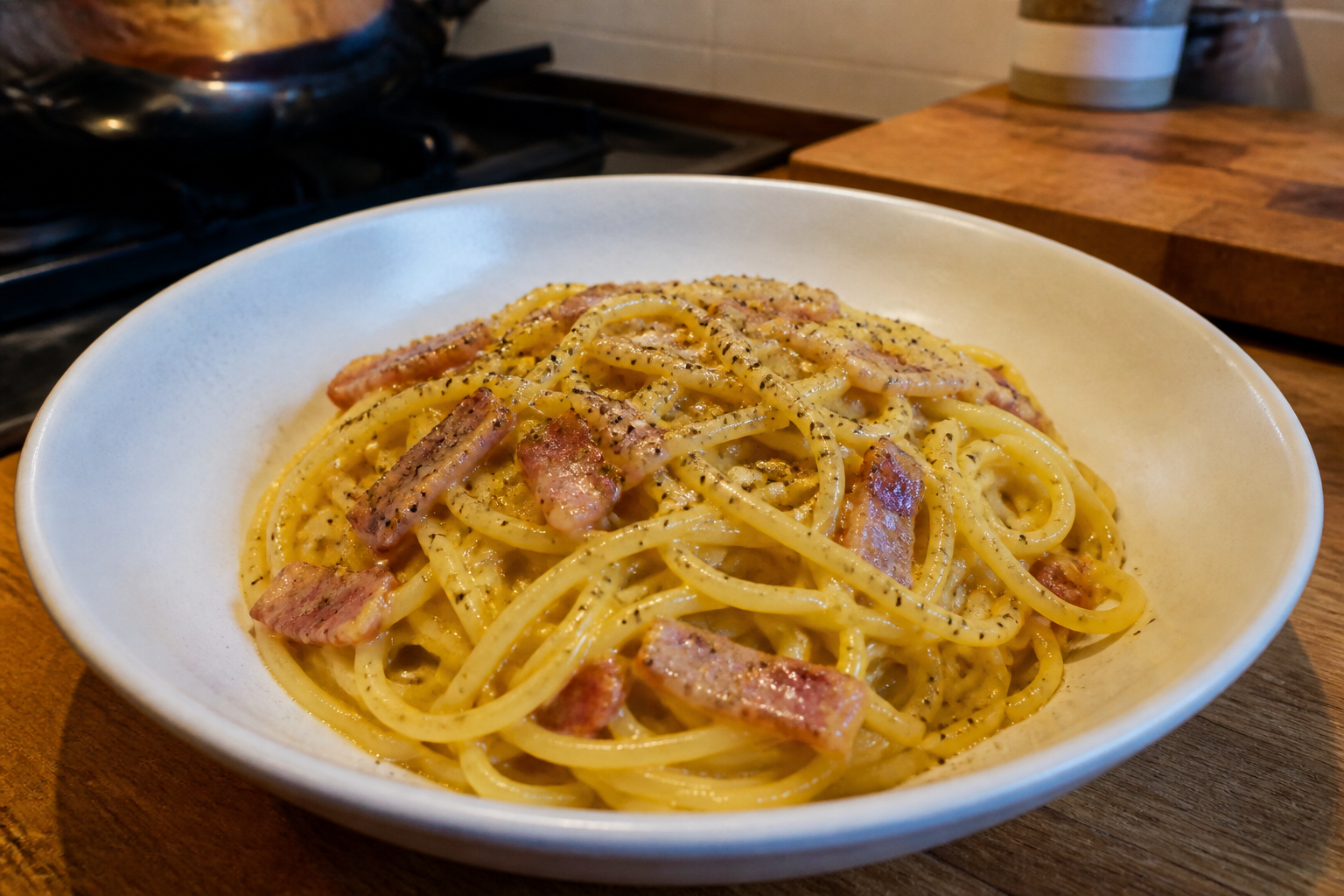 Taste, adjust pepper, plate immediately with more Pecorino and pepper. Serve at once — carbonara waits for no table.
Estimated nutrition
About 480 calories per serving (based on 4 servings). Values are estimates for home cooks and vary by brands, oil used, and portion size — not lab-analysed.
Plate it now
Carbonara wants a warm bowl and a fork immediately. Pepper and more Pecorino at the table.
I do not plan leftovers. Reheated carbonara turns into sad scrambled pasta. If you must save some, eat it cold the next day like a picnic leftover, or accept that a gentle splash of water on low heat will only get you halfway back.
Carbonara questions
No guanciale near me?
Pancetta works. Flavour is milder. Bacon is smokier than Rome, but I have used it when that was the only option.
Why did my sauce scramble?
Heat. Off the burner, wait, toss hard, add water a spoon at a time.
Parmesan instead of Pecorino?
You can mix, but Pecorino is sharper and saltier. That bite is part of the dish.
Can I use cream if I am scared of scrambling?
I don’t. Cream hides the mistake instead of fixing it. Pull the pan off the heat, wait a few seconds, toss hard, and add pasta water a spoon at a time. That is the whole method.
This recipe is original CookMe editorial content for home cooks. Nutrition varies by brands and portions. If you have allergies, check every label. CookMe may display ads via partners such as Mediavine; see our Privacy Policy and Advertising Disclosure.